Wine Production
Wine History & Culture

Wine making is defined as the intentional transformation of grape juice into wine through fermentation. The key to quality winemaking lies in experience, intuition, and an understanding of how the complex interaction of hundreds of choices can lead to a desired result.
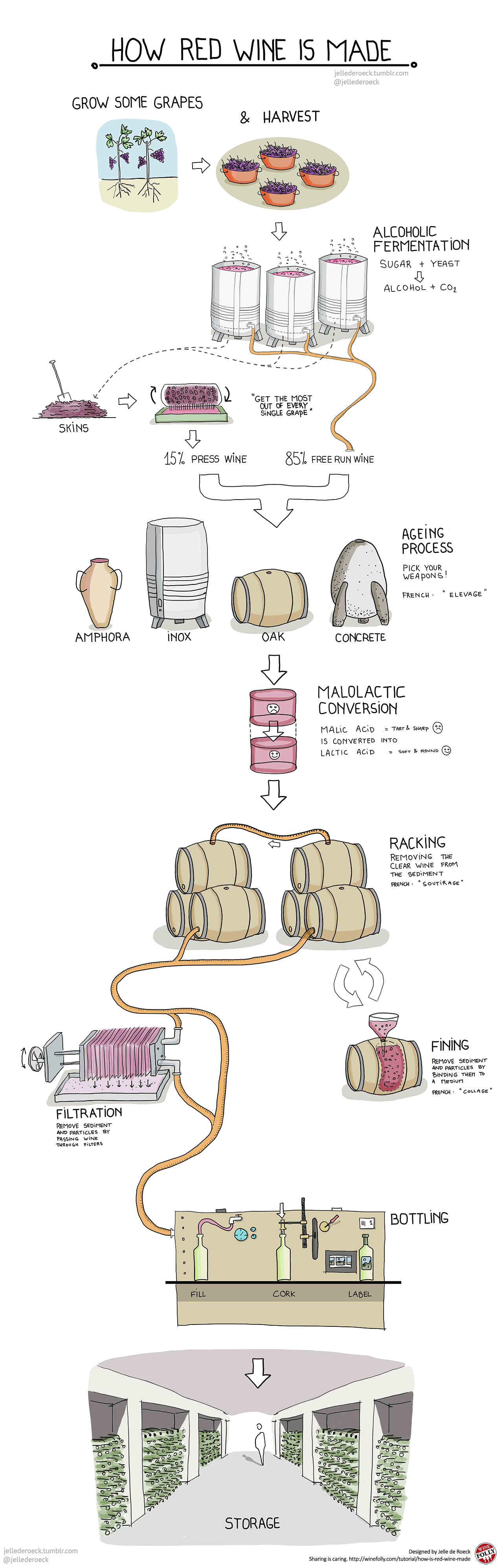
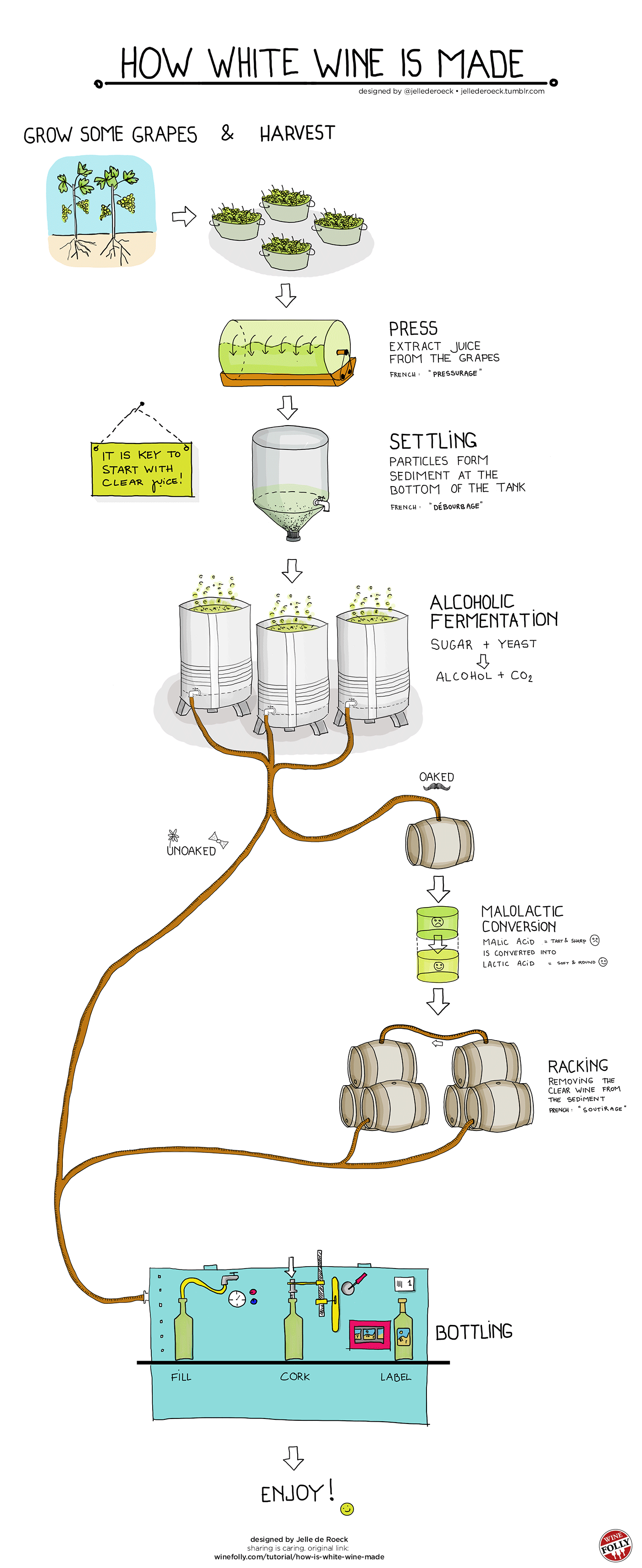
It can be a very complex process which I have tried my best to detail below, but if you just want to understand the basics… please see the flow chart at the end of this post!


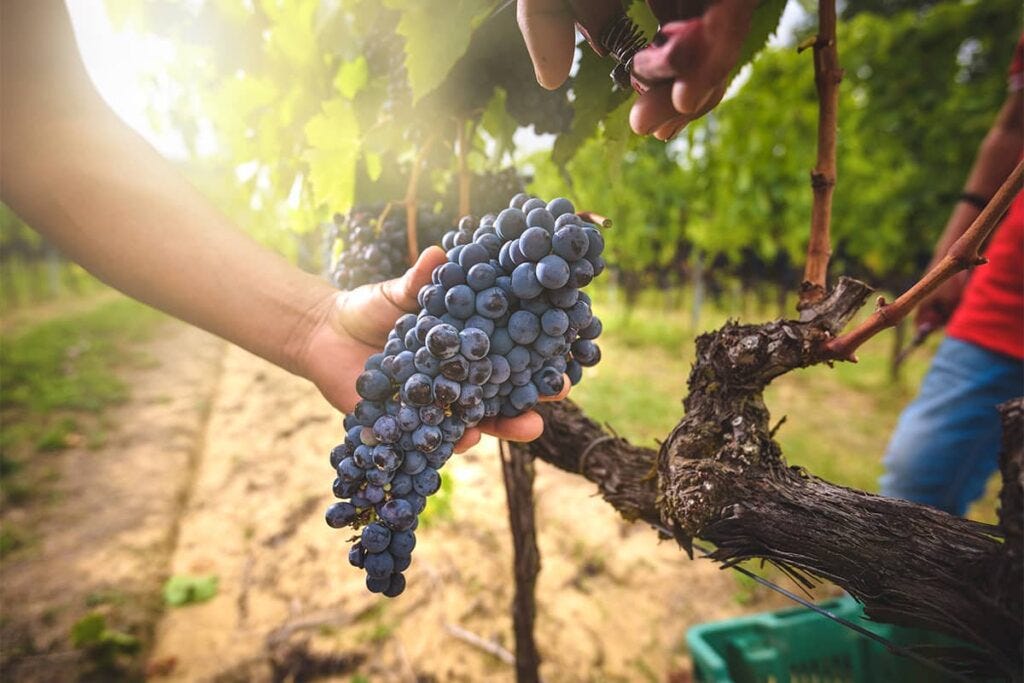
The beginning of the winemaking process starts with the decision of when to pick or harvest the grapes from the vines. Of the entire winemaking process, this is the most critical part. Unlike other fruits such as bananas or avocados, grapes don’t continue to ripen once they’re picked. Therefore, it needs to be ensured that the grapes are picked at just the right moment – the earlier the grapes are picked (less ripe), the higher acidity they will have and the later the grapes are picked (riper), the higher the sugar concentration. Other factors that need to be considered other than the amount of sugar and acid in the grapes include the impending weather and the availability of tank space in the winey! All in all, the primary goal is to ensure that the picked fruit is kept cool, intact and arrives quickly to the winery.


Once the grapes are harvested, they’re taken to the winery and processed (never washed, as this would ruin the fruit-quality concentration!). Initially the grapes are then put onto a sorting table to remove the “MOG” (materials over than grapes, which can include leaves or stones etc) – only if this hasn’t already been done in the vineyard.
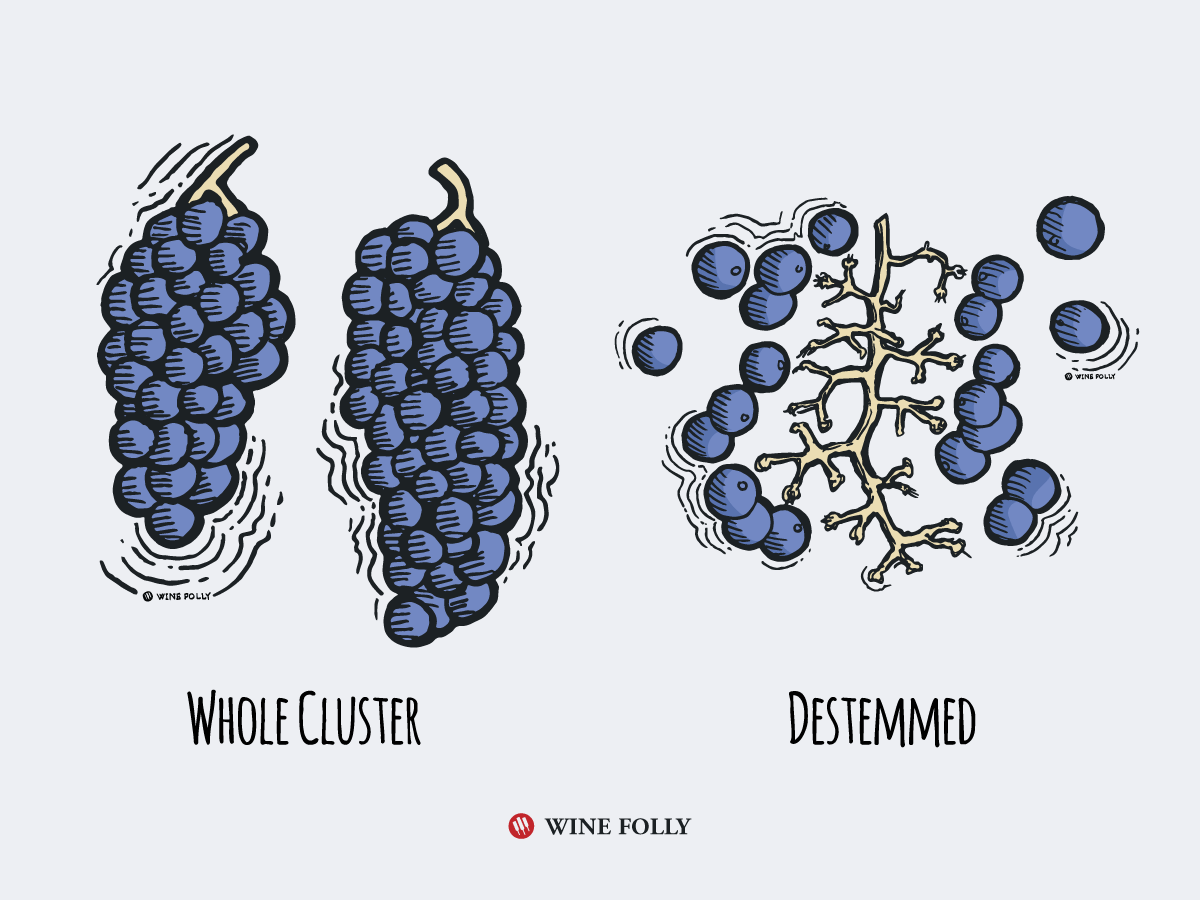
The first step of the winemaking process after harvest is extracting the must from the grapes. The term “must” is derived from the Latin term “vinum mustum”, meaning “young wine”. In winemaking, must is the name given to the freshly pressed or crushed grape juice, containing the skins, stems (sometimes these are removed beforehand) and seeds of the grape. If the grapes are not destemmed before pressing or crushing then the winemaker has opted for a version of whole cluster pressing, which would cause the must to have more tannins. This choice would be to impart more flavours into the wine, if the grape stem is young and green it would add vegetal and herbal notes to the wine, whereas if the grape stem is ripe then it would bring more mellow and peppery flavours.
There are different ways to extract the must from the grapes, pressing or crushing.
Crushing is for Red wines, to colour the juice with the skin of the grapes and keeps the skin and seeds with the grapes for fermentation. Generally, White wines will go directly into a pneumatic press which gently squeezes the grape and separates the juice from the skin and the flesh. The stuff left behind after pressing is called pomace and has many uses beyond the winery, including cosmetics, food products or fertiliser in the winery. The time that the grape must spends in contact with the pomace will determine the some of the characteristics of the wine including colour and acidity and this length of time is up to the winemaker.
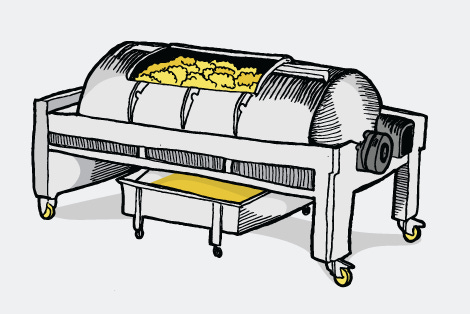
One the grape must is ready it is then transferred to the appropriate fermentation tank. The type of fermentation tank is dependent on the winemakers’ preferences and is typically made from either wood, stainless steel or concrete (all imparting different traits onto the wine). The size and material of the fermentation vessel are important as this can have an impact on the temperature of fermentation which can have a resulting impact on the flavours of the wine. Many modern tanks are equipped with cooling jackets to provide that extra control.


The chemical reaction of alcoholic fermentation can occur naturally thanks to the yeast in the grapes; however, many winemakers will use commercial yeasts (such as saccharmocyes) to better control the outcome of fermentation. The yeast will consume the sugar in the grape and then produce ethanol (alcohol), therefore the higher the sugar in the grape the higher the potential alcohol content. During the process of fermentation, heat is produced which can also affect the flavours of the wines. Especially for White wines where there is a need to preserve the delicate floral and fruit aromas – which is where the modern tank cooling jackets are very helpful in maintaining the temperature.


The winemakers can track the progress of the alcoholic fermentation by measuring the Brix level which is done using a refractometer or hydrometer. This will measure the must levels (i.e. the sugar) in the wine grapes and in turn it is possible to calculate the alcohol potential.
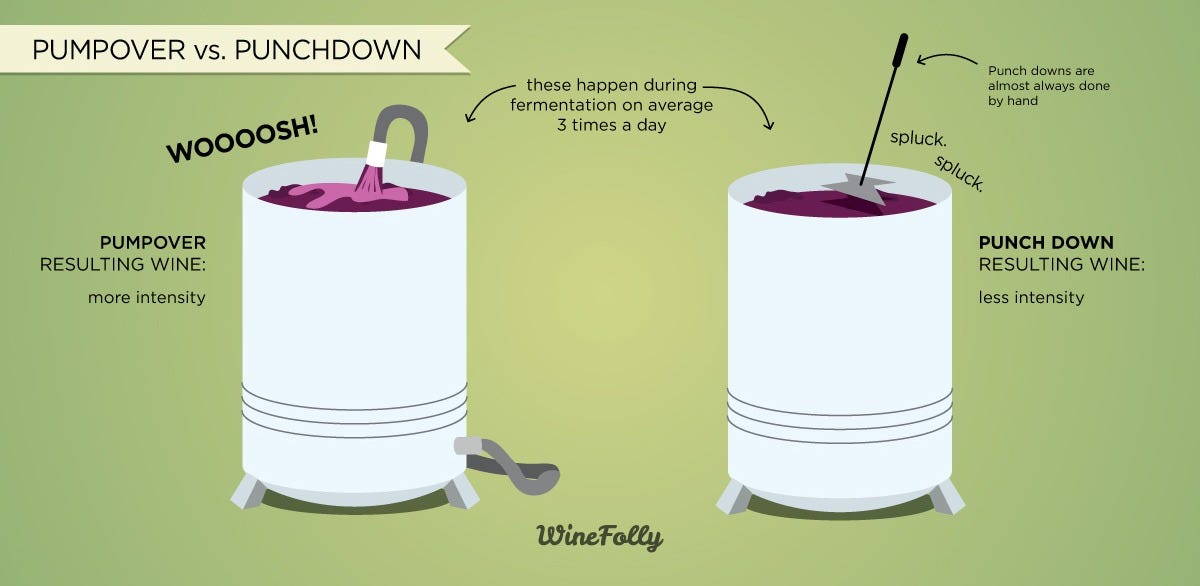
A by-product of the Alcoholic Fermentation process is carbon dioxide and in still wines this is generally released (although some maybe kept helping maintain the freshness and vibrancy of the wine). In Red wine fermentation tanks, the carbon dioxide will cause any remaining grape seeds and skins to rise to the surface. To maintain an even exposure to the traits provided by the grape seeds and skins, winemakers can choose to punch down the cap (essentially pushing the top layer of grape seeds and skins to the bottom of the vat) or pump over (where juice from the bottom of the vat is gently poured over the top of the skins and seeds). The choice between punch down or pump over is dependent on the grape variety and desired taste profile. Generally, lighter varieties will use the punch down method and bolder varieties will use the pump over method.
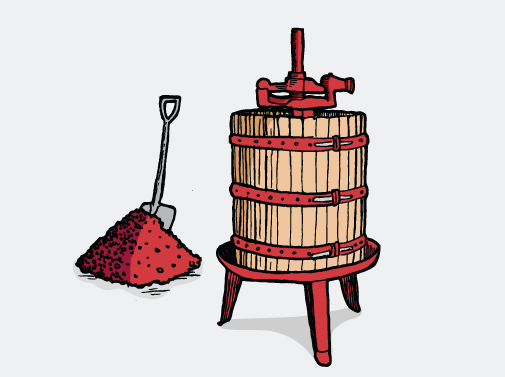
It is at this stage that the Red wines will be pressed (to finally separate them from the grape skins, seeds and stems). The juice that runs from the fermentation tank without being pressed is referred to as “free-run wine” and is considered the purest, highest quality wine. The rest of the wine from the fermentation tank is pressed and is known as “press-wine” and is typically blended back into the free run wine.
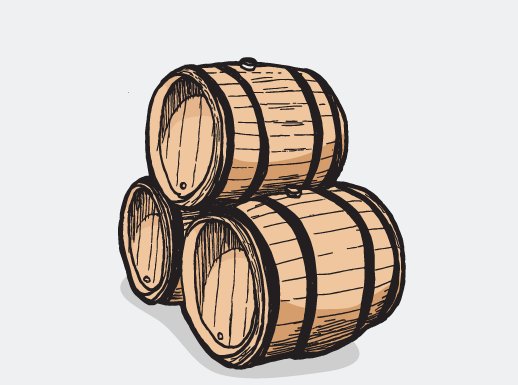
Élevage is the term we use for the period of time after fermentation, before a wine is bottled and depending on wine style, élevage can last anywhere from a few months to several years. It is during this time that wines are racked, tested, tasted, stirred and often blended together to make the final wine.


The vessel that is used for élevage can also have an impact on the flavour of the wines, be it stainless steel, concrete, oak, clay, glass etc. This again is down to the winemakers preferences and vision for the outcome of the wine profile. For example, the proportion of new oak, toast level, and origin of the wood all impact the flavour imparted by the barrel. Even an older barrel that has no flavour at all of wood anymore can still have a great effect on the wine.
Most Red wines and some White wines will then undergo Malolactic Fermentation (secondary fermentation) which continues the conversion of sugar into alcohol. Malolactic Fermentation converts the harsh malic acid (i.e. the tartness acidity of a green apple) into softer lactic acid (i.e. the softer texture of cream). It’s not necessary to the wine making process, but it is a popular method to enhance stability and complexity in a wine.
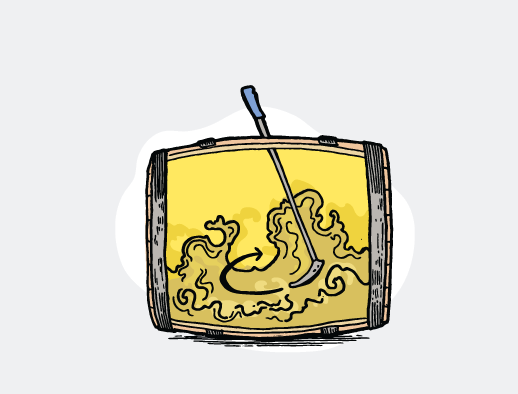
Stirring, or bâtonnage, increases contact with the lees, which are yeast cells and other solids that have settled from the wine. Stirring is a great way to bring flavour into a white wine, especially if it has gone through primary fermentation only (no malolactic fermentation).
During the ageing process Topping off replaces wine lost to evaporation during aging. The evaporation of wine from a barrel has been referred to as the “angel’s share”. Therefore, it is necessary to top up the barrels from time to time with fresh wine to prevent oxygen from getting into the barrel or container. This practice is usually carried out several times before bottling. This is because the biggest enemy of wine is access to oxygen, while a small amount maybe beneficial, excessive oxidation will result in a bad wine. Protection from this is usually achieved by the addition of sulphur dioxide, which is a preservative that has been used in wine production for hundreds of years.
Prior to bottling the wine it is important to clarify the wine, which can be done by filtration or fining. Filtration is the removal of sediment, yeast or bacteria from the wine – this is important as you want to make sure you’ve removed any yeast or bacteria that could become active once bottled. Spoilage from undesirable yeast or bacteria can impart flaws, such as high levels of volatile acidity.
Fining agents such as egg whites or clay can be used to improve the tannin structure, clarity, or aroma of a wine. This is the last opportunity a winemaker has, to influence the quality of the wine.


The Bottling lines are quite complex and there can be opportunities for error, it is often the most overlooked aspect of winemaking, but it is an essential step to ensure quality. There are many options to bottle closures today, natural cork, agglomerated corks, plastic closures, glass closures and screwcaps. The same wine under different closures will vary in terms of consistency, rate of oxidation, and flavour – also the winemaker must take into consideration the cost and consumer perception!


All in all, patience is key in winemaking. The fundamental principles of winemaking are relatively universal, but practices do vary by region, country, grape variety, wine style etc. This is what allows winemakers to create unique expressions, making every wine a new experience for the consumer.